Protecting your child's teeth - a parent's guide to prevention
This week’s headlines carried a figure that should stop every parent for a moment: 21,787 children aged five to nine were admitted to hospital in England last year to have decayed teeth taken out. Tooth decay is still the most common reason young children are admitted to hospital at all - ahead of everything else childhood can throw at them.
And here is the part worth holding onto: almost every one of those admissions was preventable. Not with anything expensive or complicated, but with a handful of habits that cost pennies and take minutes. This is the guide we’d give any parent who asked.
Start early - the first visit matters more than you’d think
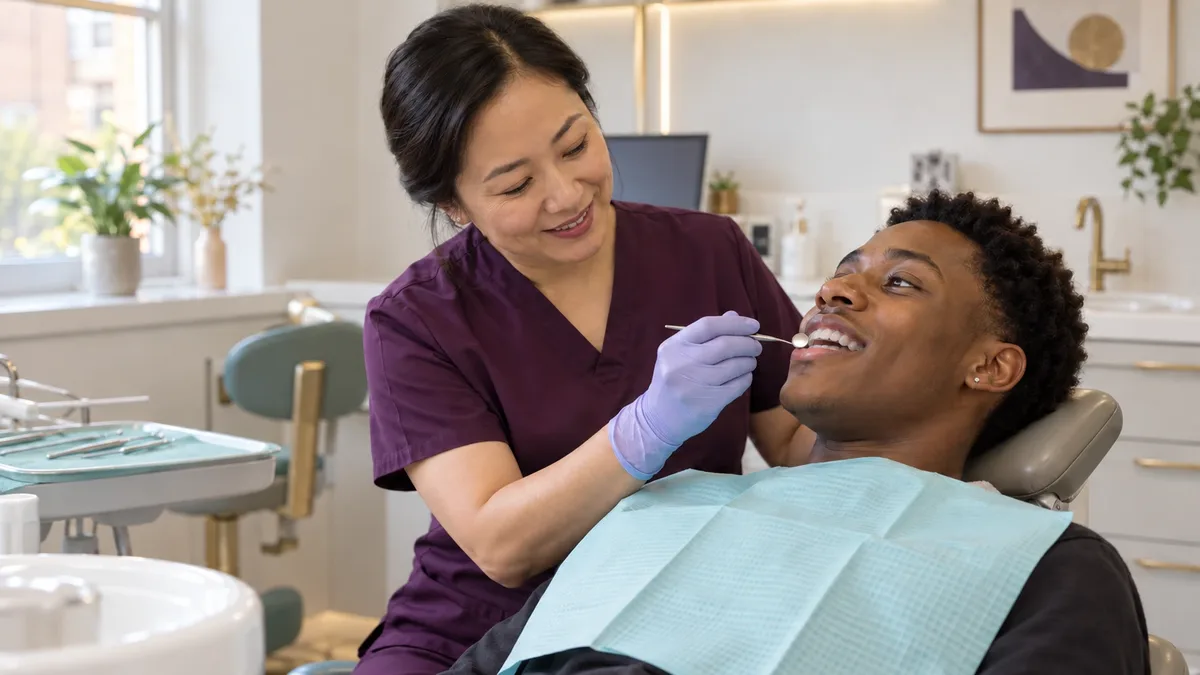
Bring your child for their first visit by their first birthday, or as soon as their first tooth appears. That sounds early, and that’s exactly the point.
A first visit at one isn’t really about treatment - there’s usually nothing to treat. It’s about building the right habits from the start. Your child learns that the dental chair is a normal, slightly boring part of life, long before there’s any reason to be scared of it. You get personal advice on brushing, bottles, dummies and diet while it can still shape things. And we get a baseline, so anything unusual gets spotted while it’s still tiny.
Children who start early become adults who just… go to the dentist. That habit, formed before the age of two, quietly protects their teeth for the rest of their life.
Then let regularity do the work
Decay is silent while it’s small. A spot of trouble caught at a routine check-up is a five-minute conversation; the same spot left for two years is how a child ends up in a hospital gown. Regular check-ups also mean regular fluoride varnish - a quick, painless coat of protection that meaningfully cuts decay in growing teeth.
By the time a child is awake at night with toothache, the easy options have usually gone. Regularity is what keeps you out of that situation - it wins slowly, and it wins every time.
Brushing: small details, big difference
- Twice a day with fluoride toothpaste - a smear for under-threes, a pea-sized amount from age three.
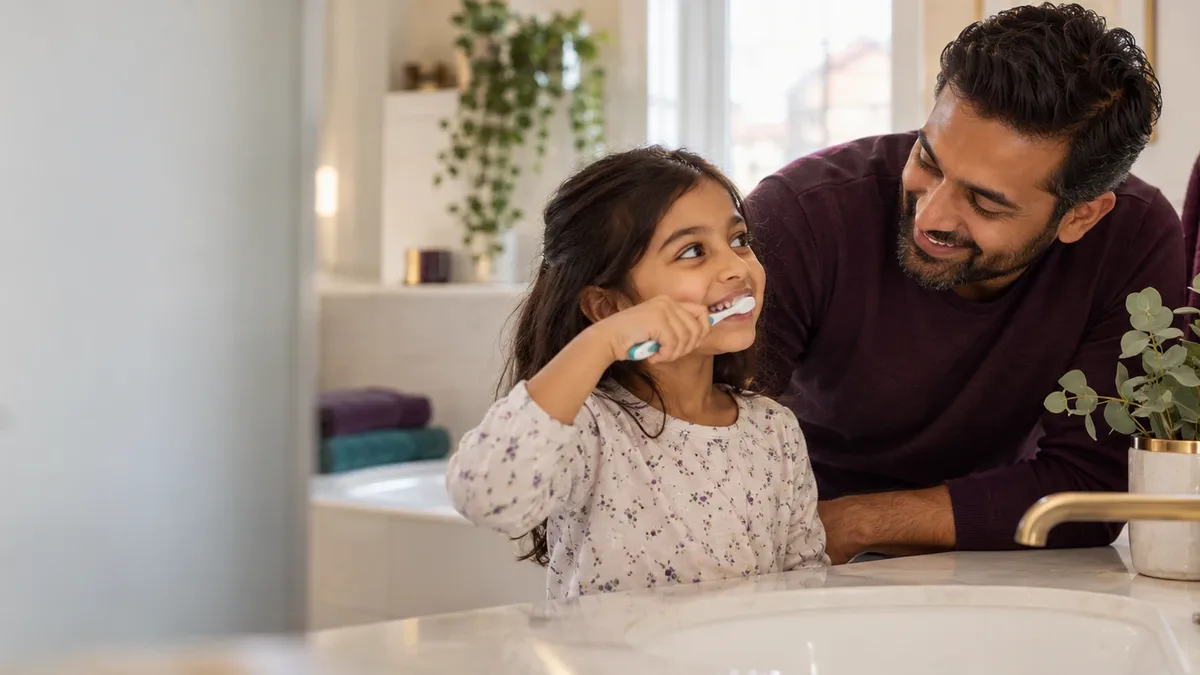
- A grown-up brushes or supervises until at least age seven. Little hands genuinely can’t do it properly alone before then, however enthusiastic they are.
- Spit, don’t rinse. Rinsing washes the fluoride away just when it’s meant to be working.
- Last thing before bed matters most - nothing but water after the evening brush.
The sugar that doesn’t look like sugar
Most parents are already careful with sweets and fizzy drinks. The sugar that catches families out is the sugar that’s dressed up as something healthy:
- Fruit juice and smoothies - even fresh-pressed, the sugar is out of the fruit and straight onto the teeth. Keep juice to mealtimes, diluted, in a cup rather than a bottle.
- Dried fruit - raisins are sticky little sugar parcels that cling to teeth for hours. Fine with a meal, a poor choice as an all-day snack.
- Flavoured yoghurts and fromage frais - some small pots carry several teaspoons of sugar. Plain yoghurt with real fruit does the same job.
- Breakfast cereals and cereal bars - check the label; many aimed at children are a quarter sugar.
- Baby food pouches - convenient, but many fruit pouches are as sugary as dessert, and sucking them coats the teeth. Spoon-fed is better than sucked.
- “No added sugar” squash and sauces - ketchup, honey and syrups all count too.
The label trick worth knowing: find “of which sugars” on the packet - 4g is a teaspoon. Count the teaspoons and some “healthy” snacks look very different.
And one rule beats all the others: it’s how often, not how much. Teeth can cope with sugar at mealtimes, because saliva gets time to repair the surface in between. What causes decay is grazing - sweet snacks and sippy drinks trickling through the day. Keep sugar to mealtimes, and make water or plain milk the default in between.
The quiet signs worth acting on
White or brown marks near the gumline, a child chewing on one side, going off cold drinks, or bad breath that doesn’t brush away - any of these is a reason to book, not to wait and see. Caught early, these are small fixes.
Build the habit this week
Twenty-one thousand hospital admissions is a national story, but the fix for your own child is a local one, and it starts small: one early visit, one properly supervised brush tonight, and sugar kept to mealtimes.
Book online or call us on 020 8821 2830 - we’d love to meet your little one before their teeth ever give them a reason to meet us.