I'm Having Orthodontic Treatment - Do I Still Need a Check-Up?
It’s one of the questions we hear most often at William Place:
“I’m already seeing the dentist for my aligners - why do I need a general check-up as well?”
or
“I’m in the middle of my orthodontic treatment, so I’ll skip the hygienist for now.”
It makes sense. You’re already coming in regularly, so another appointment can feel like a repeat. But orthodontic reviews and routine dental care do different jobs. Keeping up with both is one of the best ways to protect your teeth while they move, and to make sure you love the result when treatment ends.
Your orthodontic review and your check-up do different jobs
Your orthodontic appointments focus on one thing: how your teeth are moving. Your clinician checks progress against your plan, adjusts wires or gives you your next aligners, and makes sure everything is on track.
A routine check-up looks at the health of your whole mouth, including:
- Early signs of tooth decay, including between the teeth where it’s hard to see
- Gum health and signs of gum disease
- The condition of existing fillings, crowns and other dental work
- The soft tissues of your mouth, cheeks and tongue, including mouth cancer screening
- X-rays when they’re clinically needed
Straight teeth are only a good result if they’re also healthy teeth. Your check-up makes sure that’s the case.
Why orthodontic treatment makes routine care more important, not less
Braces create new places for plaque to hide. Brackets, wires and bands make brushing and flossing harder. Plaque that builds up around them can lead to decay and to white marks (early enamel damage) that may still be visible once your braces come off.
Aligners can trap sugars and acids against your teeth. Aligners cover your teeth for most of the day. If you eat or drink anything other than plain water with them in, or put them back in without brushing, sugars and acids are held against your enamel. Your aligners can also reduce how well saliva reaches your teeth, and saliva is one of your mouth’s natural defences.
Attachments collect plaque too. The small tooth-coloured bumps used with many aligner systems can hold plaque around their edges if they’re not cleaned carefully.
Healthy gums matter for tooth movement. Teeth move through the bone and gum that support them. If gums are inflamed or gum disease develops, it can affect how your treatment progresses. It’s much easier to deal with gum problems early than to pause treatment later.
Catching problems early keeps your treatment on schedule. A small cavity found at a check-up is usually simple to treat. Left unnoticed, it may need more involved treatment, and some dental work can change the shape of a tooth enough to affect how your aligners fit. Early detection means less disruption to your plan.
Why the hygienist is especially valuable during treatment
A hygiene appointment isn’t just a “polish”. While you’re in braces or aligners, your hygienist can:
- Clean the areas you can’t reach - around brackets, under wires and around attachments
- Spot problem areas early, such as gum inflammation or early enamel changes
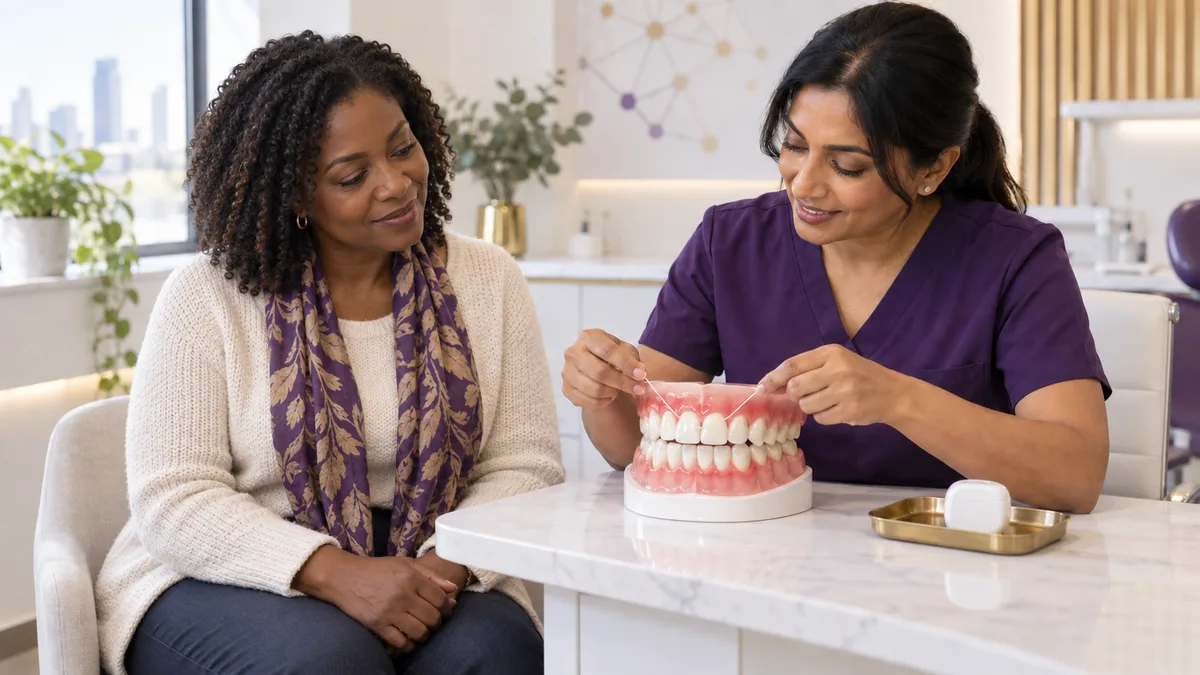
- Show you exactly how to clean around your appliance, including which interdental brushes and tools suit your mouth
- Advise on fluoride and whether extra protection would help you
Many people find that one hygiene visit early in treatment completely changes how easy their daily cleaning feels.
Simple habits that make a big difference
If you have aligners:
- Only drink plain water while your aligners are in
- Brush (or at least rinse well) before putting them back in after eating
- Clean your aligners daily as advised
- Keep an eye on the edges of your attachments when brushing
If you have fixed braces:
- Brush carefully around every bracket, above and below the wire
- Use interdental brushes to clean between teeth and under wires
- Avoid hard, sticky and chewy foods that can damage brackets or trap plaque
- Cut down on sugary snacks and drinks, especially between meals
For everyone:
- Brush twice a day with a fluoride toothpaste
- Spit, don’t rinse, after brushing so the fluoride stays on your teeth
- Keep your routine check-ups and hygiene appointments
How often should you come in?
There’s no single answer for everyone. Your dentist will recommend how often you need a check-up and hygiene visit based on your own oral health and risk, and this may change while you’re having orthodontic treatment. If you’re not sure when you’re due, just ask us.
The bottom line
Your orthodontic appointments move your teeth. Your check-ups and hygiene visits keep them healthy while they move. You need both to get the smile you’re working towards and to keep it for the long term.
If you’re mid-treatment and can’t remember when your last check-up or hygiene visit was, call us on 020 8821 2830 or email info@williamplacedental.co.uk to book an appointment.
This post is for general information and is not a substitute for individual advice from your dentist.